Grade: 4th Estimated Time: 45 minutes Topic: How a Bill Becomes a Law Materials: · Projector · Microsoft PowerPoint · Laptop with Internet Access · Construction Paper · Markers · Velcro · Pencils
Click the above link to view the PowerPoint presentation |
New York State Learning Standards Social Studies Standard (5) Students will be able to identify the three branches of government, and understand their role in the process of how a bill becomes a law. Standard (5) Students will be able to identify the necessary steps a bill has to take before it can become a law. Art Standard (1) Students will use drama to demonstrate their knowledge of the process of how a bill becomes a law. Standard (1) Students will take on the role of a specific group (Senators, Congress, Committee, or etc…) |
|||||
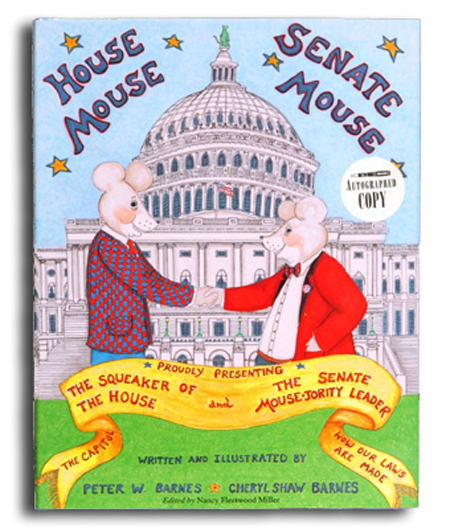
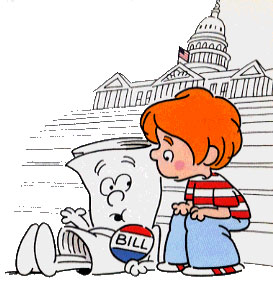
The students have been learning about their government. On Wednesday the class listened to the song “I’m Just a Bill” by David Frishberg and House Mouse, Senate Mouse by Cheryl and Peter Barnes. This lesson will help students better understand how a bill becomes a law.
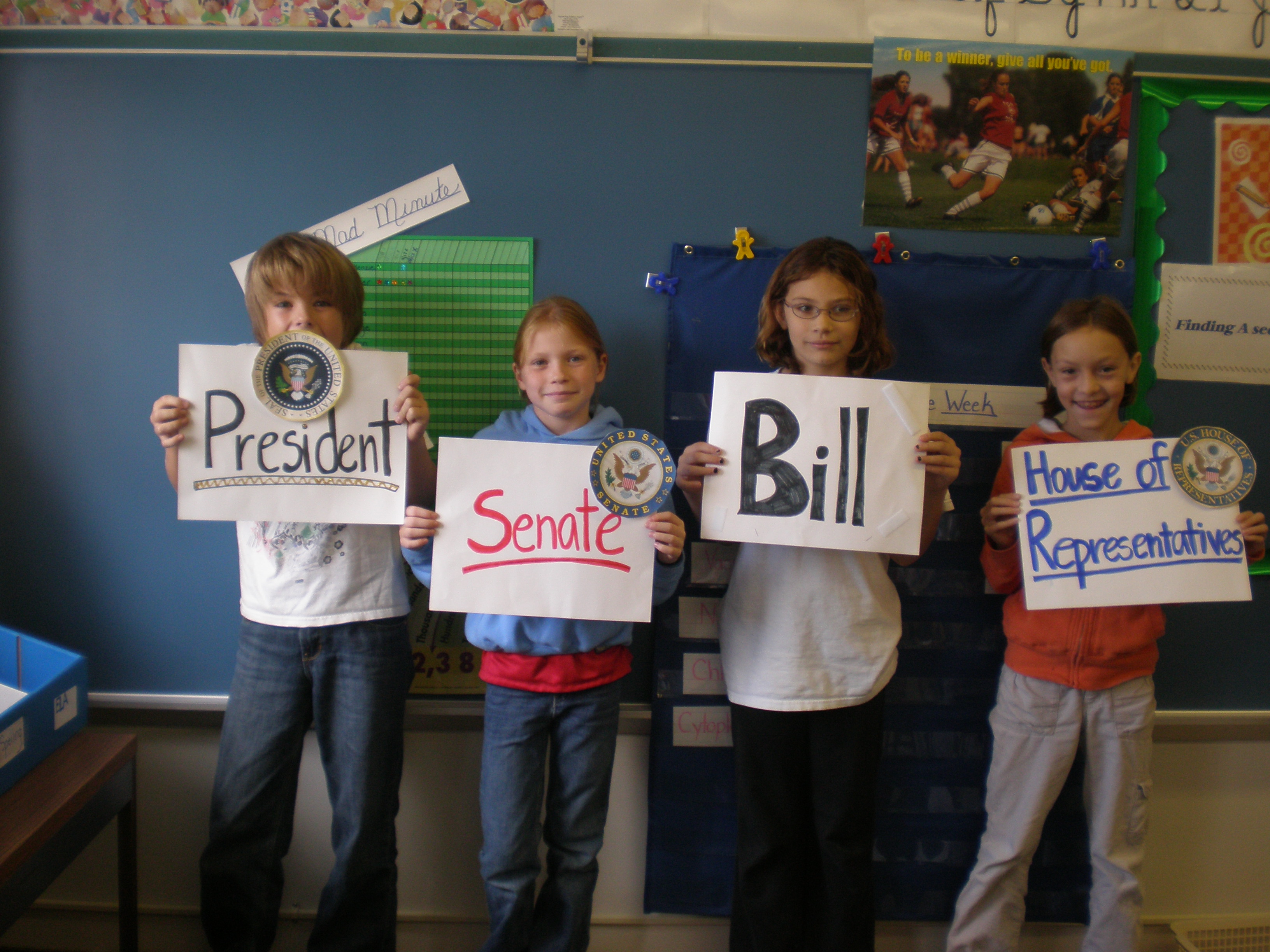
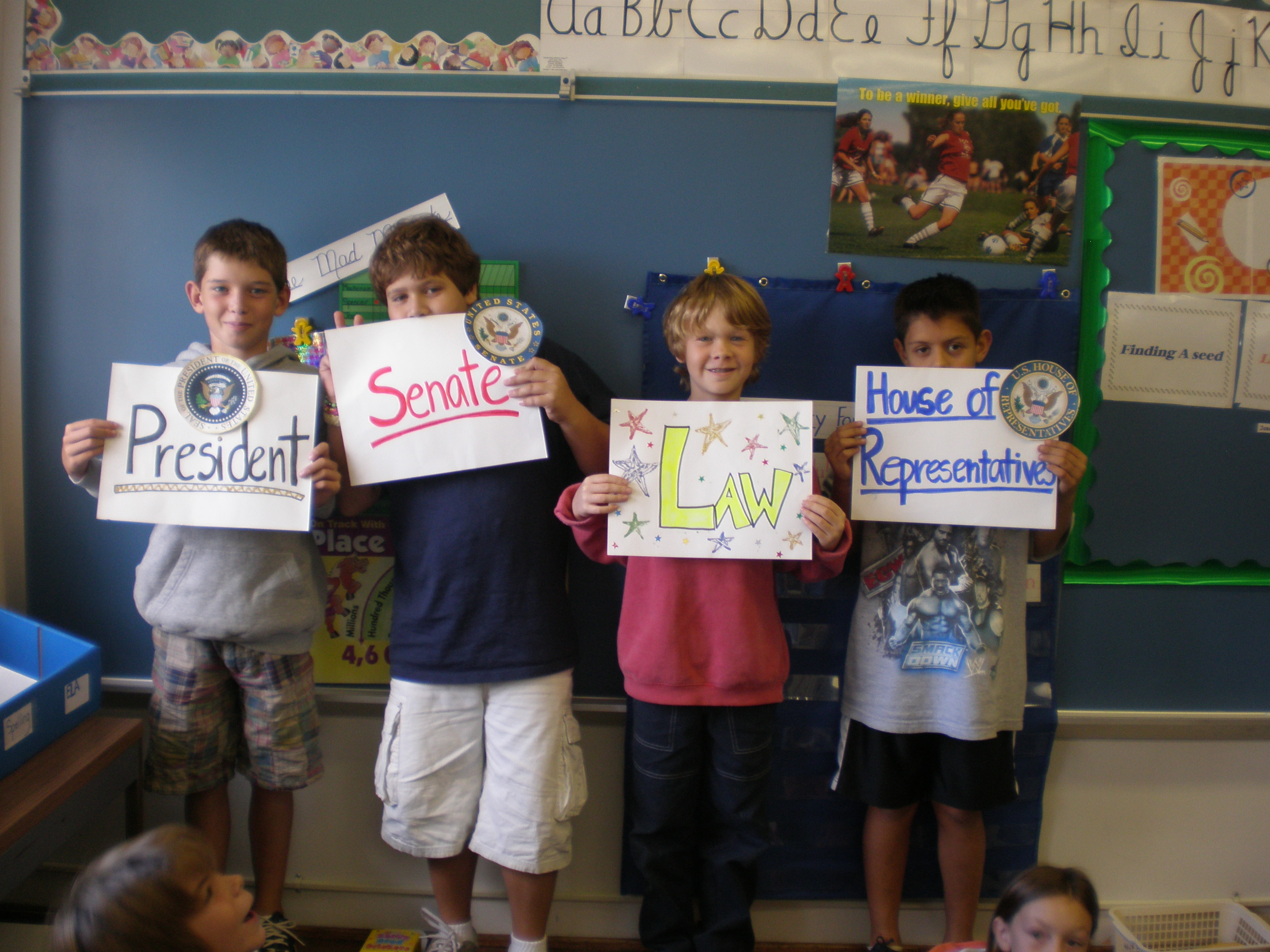
Introduction: To activate prior knowledge the teacher will ask students what they have been previously studying in Social Studies. The teacher will explain to students that the United States Constitution is the foundation of all laws in our nation. Our Founding Fathers, decided that a representative democracy was the best form of government. It is “representative” because not every single citizen has the time or experience to create our laws. Instead, we hold elections and choose people from our communities to make the best decisions for us. Elected representatives are responsible for making the laws. The Congress makes many laws each year. The teacher will show students a Power Point Presentation (See Attached) to review the process of how a bill becomes a law, and review vocabulary associated with the process such as veto, debate, committee, and etc… Developmental Activities: Following the Power Point presentation, the class guided by the teacher will dramatically play out the process of how a bill becomes a law. The teacher will have the “Person of the Day” play the role of the president. That student will receive a sign that says “President.” The teacher will then ask the students, “Who would like to play the roll of the bill?” That student will be given a sign, which says “Bill” on one side and says “Law” on the other side. The remainder of the students will be divided into two groups, the larger group will be given the “House” sign and the proportionally smaller group of students will be given the “Senate” sign. In addition, once the students have been divided into their groups, the teacher will explain to the students that at the end of the class they will be responsible for explaining their group’s role in the process of how a bill becomes a law. The teacher will guide students through the journey of how a bill becomes a law. The teacher will guide students through the journey of how a bill becomes a law. The teacher will demonstrate the process of how the bill is introduced by a committee, passing one house, going to the next house, and then to the President. The teacher will redo the process and will have the bill be changed and explain how a committee works.
Concluding Activities:
Following the whole class dramatization of how a bill becomes a law, the teacher will have the class meet back as a whole on the rug. For closure, the teacher will lead the class into a discussion about the importance of the process of how a bill becomes a law. The teacher will ask a student representative from each branch of government to answer the following question: "What role does the ______________ play in how a bill becomes a law?" In addition, the teacher will ask students what they learned from viewing the PowerPoint presentation and acting out the process through dramatic play. Evaluation:
Students will be informally assessed by their teacher. This will be done while students are answering questions posed by the teacher during the PowerPoint presentation and when students are dramatically playing how a bill becomes a law. In addition, students will be asked to complete a worksheet for homework.
Adaptations/Considerations: The enrichment group will be given a different worksheet for homework. The worksheet will differ in that the bill they are being asked to propose will require them to answer more difficult questions.
Resources:
http://clerkkids.house.gov/laws/index.html http://www.schoolhouserock.tv/Bill.html http://www2.scholastic.com/browse/book.jsp?id=2024 |
||||||

Make a Free Website with Yola.
